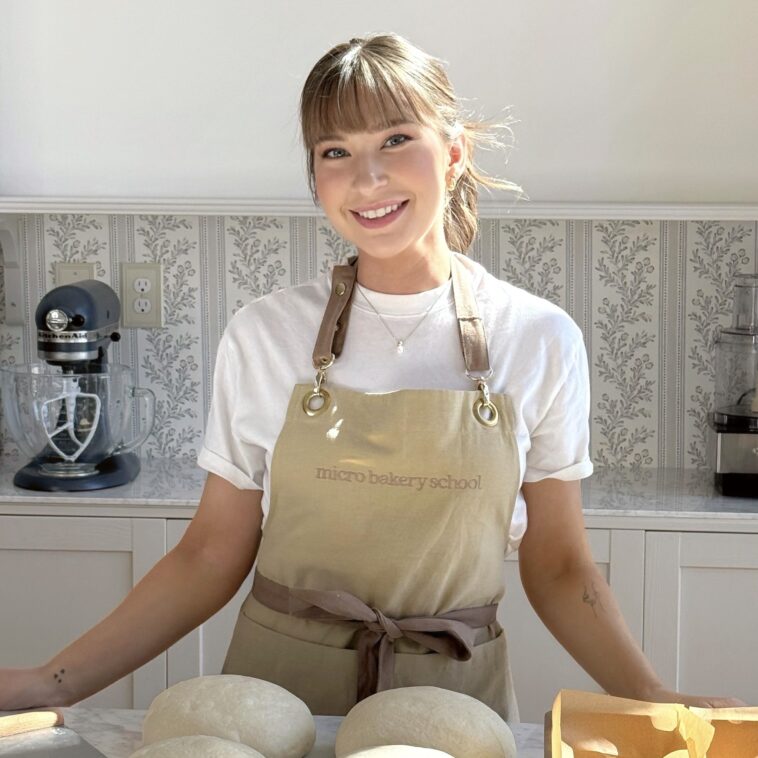
Jessica Stewart helps women build income streams that work around family obligations, not against them, through legally operated home bakeries.
Jessica Stewart watched a pattern emerge as she built her own home bakery and then launched Micro Bakery School to teach others. Women with baking skills and entrepreneurial drive were trapped between limited options. Traditional bakery ownership required six-figure investments and full-time commitment. Corporate jobs offered paychecks but inflexible schedules and minimal control. Home baking offered a third path that thousands were ready to take.
Since launching earlier this year, Micro Bakery School has enrolled thousands of students learning to start micro bakeries, small-scale operations run legally from home kitchens. The business model appeals particularly to women seeking income that accommodates rather than competes with family responsibilities.
The Flexibility Factor
Stewart, who operates The Little Loaf bakery in Scottsdale, Arizona, under the Micro Bakery Girl brand, describes the typical student profile.
They love baking. They need income. They cannot commit to traditional business hours or startup capital. They want to contribute financially without sacrificing presence at school pickups, family dinners, or evening routines.
Micro bakeries solve this by operating on schedules the baker controls entirely. A woman can bake Wednesday and Thursday evenings after children go to bed, then sell Friday and Saturday at a farmers market or through pre-orders. Revenue scales with available time rather than demanding fixed hours.
The company reports that many students sell out their first bake days within weeks of launching. That immediate market validation provides both income and confidence, proving the model works without requiring months of runway or substantial investment.
The Low-Barrier Entry
Stewart built Micro Bakery School around accessibility. The online course includes over 40 video lessons covering licensing, menu creation, product pricing, stand setup, pre-order systems, and marketing. Students receive templates, calculators, and brand kits that reduce the knowledge gap between wanting to start and actually launching.
The financial barrier is equally low. Cottage food laws allow home bakers to use existing kitchen equipment and sell directly to consumers without commercial licenses or facility inspections. A woman can start with equipment she already owns, ingredients purchased at retail, and marketing through free social media platforms.
This contrasts sharply with traditional bakery ownership, which requires commercial kitchen leases, professional equipment, business loans, and often years of runway before profitability. Micro bakeries let women test demand and build skills before committing significant capital.
The Economic Context
The side hustle economy has exploded as traditional employment offers less security and flexibility than previous generations expected. Women, who still handle disproportionate caregiving responsibilities, face particular constraints balancing income needs with family obligations.
According to industry data cited by Micro Bakery School, farmers markets have grown from fewer than 2,000 in the 1990s to nearly 9,000 today. That expansion created distribution infrastructure for home-based food businesses. Cottage food laws now exist in all 50 states, providing legal frameworks that did not exist broadly even a decade ago.
Scaling on Their Terms
Later this year, Stewart introduced Sell Out Secrets, an advanced program for bakers ready to grow. The course teaches the system Stewart used to sell out eight consecutive weeks at The Little Loaf, including tools like social media templates, advertising kits, and customer retention strategies.
The scaling path lets women increase income without necessarily increasing hours proportionally. Better systems, stronger customer relationships, and higher-value products can grow revenue while maintaining the flexibility that attracted them initially.
This matters because many women enter micro baking as a side income stream but discover potential for primary income as skills and customer bases develop. The education model provides a pathway from beginner to established business without requiring they quit day jobs or make large investments upfront.
The Real Numbers
Stewart positions micro bakeries within broader food industry trends. The global sourdough market is projected to grow from $3.3 billion in 2023 to over $5.3 billion by 2030, according to market research the company cites. Consumer movement toward handmade, locally produced food creates sustained demand that benefits home bakers.
Individual micro bakeries can generate meaningful side income or, for established operators, primary income that exceeds what many would earn in traditional employment. The exact figures depend on location, product mix, and time investment, but the company reports students consistently selling out available inventory once systems are established.
Beyond Pure Economics
Stewart describes her mission as helping women reconnect with creativity and purpose while generating income. The language reflects feedback from students who report satisfaction beyond financial returns. Baking provides creative outlet, customer interactions build community connection, and business ownership offers control that employment rarely does.
The model particularly appeals to women who left corporate careers for family reasons and struggle to find re-entry paths that accommodate their current life stage. Micro bakeries let them use existing skills, build businesses on their terms, and contribute financially without sacrificing family priorities.
The Growth Trajectory
Stewart predicts micro bakeries will become as common as coffee shops within five years, with thousands of women operating home-based baking businesses across the country. The projection depends on continued cottage food law support, sustained consumer demand for local food, and economic conditions that make flexible income streams attractive.
Micro Bakery School continues expanding its curriculum and community as more women discover the model. The business scales by serving a market that grows whenever another woman decides corporate schedules do not work for her life but income remains necessary.
Bottom Line
Jessica Stewart built Micro Bakery School to help women create income on their terms through legally operated home bakeries. By teaching thousands of students to launch micro bakeries that fit around family obligations rather than competing with them, she tapped into demand from women seeking flexibility, purpose, and financial contribution without traditional business barriers or corporate constraints. The model works because cottage food laws, farmers markets, and digital tools now make home baking businesses viable in ways they were not previously.
 microbakeryschool.com/register
Instagram: @microbakerygirl