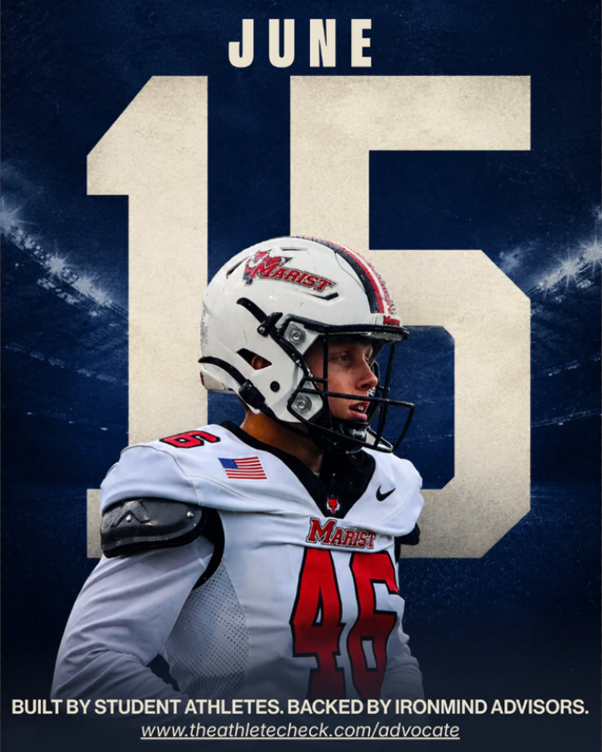
For many student-athletes, the answer comes automatically.
Who are you?
I’m a football player.
I’m a swimmer.
I’m a soccer player.
I’m a basketball player.
Years of training, competition, sacrifice, and achievement create a powerful sense of identity. Athletics becomes more than an activity. It becomes a lens through which athletes view themselves and how the world views them.
There is nothing inherently wrong with that.
Sports build confidence, resilience, discipline, leadership, and purpose.
The challenge emerges when athletic identity becomes the only identity.
An injury. A coaching change. A lost starting position. A season-ending setback. Graduation. Retirement.
Suddenly, many athletes find themselves confronting a question they never expected:
Who am I if I can’t compete?
This conversation is becoming increasingly important across collegiate athletics. While schools and coaches do an incredible job developing athletes physically and academically, far fewer systems exist to help athletes build confidence in who they are beyond performance.
That gap is exactly what TheAthleteCheck was built to address.
The Identity Challenge Nobody Trains For
Athletes spend thousands of hours developing their physical abilities.
Strength coaches measure performance.
Coaches analyze film.
Athletic departments track progress.
Every aspect of athletic development is monitored, reviewed, and improved.
Yet one of the most important components of long-term success often receives little attention: identity.
Most student-athletes never receive formal guidance on building a sense of self that extends beyond competition.
As a result, setbacks that should feel temporary can feel deeply personal.
A poor performance doesn’t just affect confidence.
It affects identity.
A lost season doesn’t just interrupt development.
It can create uncertainty about purpose and self-worth.
TheAthleteCheck Assessment was created to help student-athletes evaluate these areas before challenges become overwhelming.
Available at TheAthleteCheck.com/assessment, the assessment encourages athletes to reflect on topics that rarely appear on stat sheets, including confidence, purpose, resilience, well-being, and identity beyond sport.
More Than a Mental Health Conversation
Many people hear the words “mental health” and immediately think about crisis intervention.
But student-athlete wellness is much broader than that.
It includes:
- Confidence
- Purpose
- Self-awareness
- Leadership
- Relationships
- Personal development
TheAthleteCheck was founded on the belief that supporting athletes means supporting the whole person.
That’s why the platform focuses not only on challenges athletes face, but also on helping them better understand themselves as leaders, students, teammates, and individuals.
The assessment serves as a starting point for those conversations.
Rather than waiting for a breaking point, athletes can proactively evaluate where they stand and identify opportunities for growth.
Built By Student-Athletes Who Saw The Problem Firsthand
TheAthleteCheck wasn’t developed by people observing athletes from the outside.
It was built by student-athletes themselves.
Co-founders Luke Stenson and Wyatt Porch understood firsthand the pressures that come with competing at the Division I level.
They recognized that many athletes were receiving support for performance while receiving far less support for identity development and personal well-being.
Rather than accepting that reality, they decided to create something different.
Their vision was simple:
Help athletes thrive not just in sports, but in life.
That vision continues to guide everything TheAthleteCheck does today.
Building Stronger Athletes By Building Stronger People
One of the most common misconceptions in sports is that focusing on identity beyond athletics somehow weakens competitiveness.
The opposite is often true.
Athletes with a stronger sense of self are often more resilient during adversity.
They recover from setbacks more effectively.
They navigate transitions more successfully.
They build healthier relationships.
And they carry those skills long after their playing careers end.
TheAthleteCheck Assessment was designed to support that development by helping athletes better understand who they are beyond their sport.
Because the goal isn’t to replace athletic identity.
The goal is to strengthen everything around it.
The Future of Athlete Development
TheAthleteCheck operates around five core principles:
Advocate.
Educate.
Empower.
Protect.
Inspire.
Together, those principles represent a broader vision for athlete development, one that recognizes student-athletes as complete individuals rather than simply performers.
Athletes can access the assessment directly at TheAthleteCheck.com/assessment and begin evaluating areas of their lives that deserve just as much attention as physical training.
Because every athlete will eventually leave the game.
The question is whether they have built an identity strong enough to thrive when they do.
For Luke Stenson and Wyatt Porch, helping athletes answer that question is what TheAthleteCheck is all about.