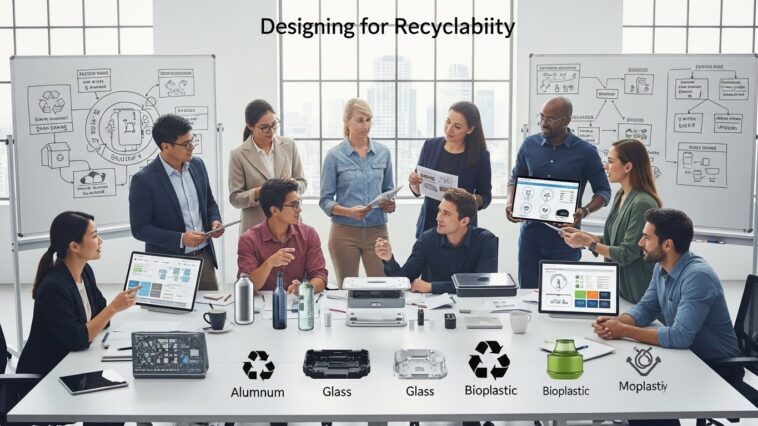
For decades, the manufacturing floor was the final step in a linear process: design, produce, ship. However, as the global focus shifts toward a circular economy, the “manufacturing floor” has been reimagined. It is no longer just a place where products are made, but a critical junction where waste is intercepted and materials are reclaimed.
“Designing for Recyclability” is the practice of ensuring a product can be effectively processed at its end-of-life—but this commitment starts long before the consumer throws the bottle in the bin. Here are three ways this philosophy is transforming the manufacturing landscape.
1. Engineering for Material Separation
One of the greatest hurdles in recycling is the mixing of “dissimilar resins”—different types of plastic that cannot be melted together. Innovative design now focuses on features that make separation easy for the end-user or the recycling facility. For example, designing removable tamper-evident bands allows for different plastic types to be sorted correctly, ensuring that a high-quality bottle doesn’t end up in a landfill simply because its lid was made of a different polymer.
2. Onsite Recyclate Integration
The most efficient way to reduce environmental impact is to keep materials within the same facility. Modern manufacturing plants are now being outfitted with onsite regrind and recycling facilities. This allows “post-industrial” waste the offcuts and scraps generated during the molding process—to be instantly captured, processed, and fed back into the production cycle. This internal loop significantly reduces the need for virgin resin and eliminates the carbon footprint of transporting waste to external facilities.
3. Precision Technology to Minimise Reject Waste
Designing for recyclability also means designing for efficiency. By utilizing state-of-the-art 3D laser measurement equipment and automated quality controls, manufacturers can ensure every container meets exact specifications the first time. This precision reduces the volume of “reject” products, ensuring that energy and raw materials are never wasted on faulty items.
This dedication to efficiency is a cornerstone of the industry’s move toward a zero net waste manufacturing model, where over 95% of materials generated in the production process are either reused or recycled. This approach proves that sustainable packaging isn’t just about the final product, but about the integrity of the process that created it.
A New Standard for the Factory Floor
The shift toward designing for disposal represents a fundamental change in how we value materials. By integrating recycling capabilities directly into the manufacturing environment and using smart design to facilitate easy sorting, the industry is moving closer to a truly circular model. When design and disposal are treated as two sides of the same coin, the manufacturing floor becomes a powerful engine for environmental stewardship, ensuring that today’s packaging becomes tomorrow’s resource.