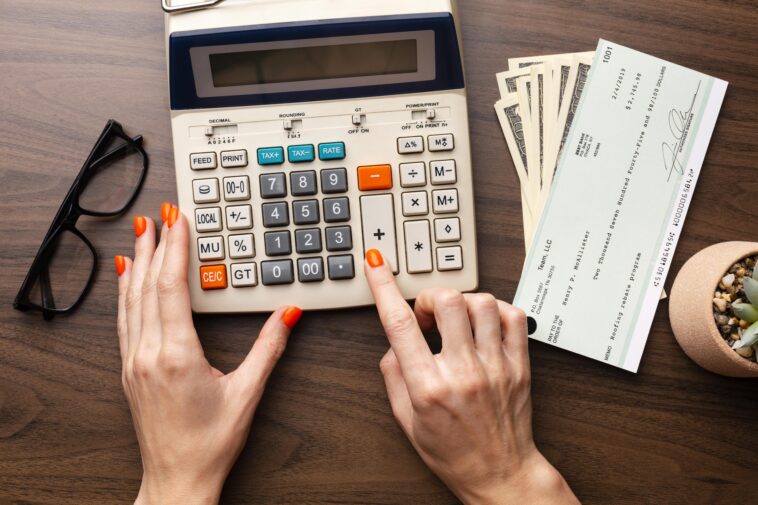
By the time the middle of January rolls around, the shiny veneer of our New Year’s resolutions usually starts to crack. We promised ourselves we would save more, spend less, and finally get that credit card balance down to zero. But then, reality sets in. The Buy Now button is just too easy to click. The tap-to-pay terminal at the coffee shop is too convenient. The subscription services quietly siphon money out of our accounts while we sleep.
We are living in a frictionless economy. Technology has removed every barrier between us and our money, making spending feel effortless and, frankly, not quite real.
If you are struggling to get a grip on your finances, the solution might not be another budgeting app or a complex spreadsheet. The solution might be to add a little bit of friction back into your life. It might be time to dust off the checkbook.
Using physical checks is a powerful psychological tool. It forces you to slow down. It forces you to engage with your money manually. In a world of invisible transactions, the physical act of writing a check is a pattern interrupt that can help you regain control, build awareness, and actually stick to the goals you set on New Year’s Eve.
Here is why going old school with your payments might be the modern hack your budget needs.
1. Reestablishing the Pain of Paying
Behavioral economists have a term for the negative feeling we get when we part with our money: the pain of paying. This pain is actually a good thing; it’s a natural brake that stops us from overspending.
Digital payments have successfully anesthetized this pain. When you wave your phone at a terminal or swipe a credit card, the transaction feels abstract. You get the product immediately, but the financial consequence is delayed until the end of the month. It feels free.
Writing a check brings the pain back. You have to physically write out the date. You have to write the recipient’s name. Most importantly, you have to write the dollar amount twice. Once in numbers, and once in words.
Writing one hundred and fifty dollars forces your brain to process the magnitude of the expense. It is a moment of reckoning. That thirty seconds of effort creates a mindful pause that a microsecond chip-read cannot replicate. It reconnects you to the reality that resources are leaving your possession, making you less likely to spend frivolously.
2. Breaking the Autopay Trance
Autopay is convenient, but it breeds complacency. We call it setting and forgetting, but from a budgeting perspective, it’s more like ignoring and denying.
When your electric bill, your gym membership, and your streaming services are all deducted automatically, you lose touch with your monthly burn rate. You might know your mortgage is around $2,000, but you don’t feel it leaving.
Try a radical experiment for the first quarter of the year: remove your largest bills from autopay and pay them by check.
Sit down once a month at your kitchen table. Write the check for the mortgage. Write the check for the car insurance. Put them in envelopes and stamp them. This ritual forces you to confront your fixed expenses. It reminds you exactly how much it costs to maintain your lifestyle. This awareness is often the shock people need to realize they are house poor or over-subscribed, motivating them to make the big structural changes that actually move the needle on net worth.
3. The Manual Ledger
Before we had banking apps on our phones, we had the check register. It was a small booklet where you recorded every transaction and did the math to see what was left.
Today, we check our balance on an app. But an app balance is often misleading. It shows you what is there right now, not what is spoken for. It doesn’t account for the check you mailed yesterday or the subscription hitting tomorrow.
Using checks forces you to keep a running, manual tally. When you write a check, you immediately subtract that amount from your running total. This gives you a true balance.
The act of handwriting your expenses engages a different part of the brain than simply viewing them on a screen. It improves memory retention. You are far more likely to remember that you spent $200 on groceries if you wrote it down than if you just tapped a card. This improved recall helps you make better decisions throughout the rest of the week because the spending is fresh in your mind.
4. A Debt-Reduction Ritual
If your resolution is to get out of debt, checks are your best friend. Paying off a credit card digitally is anticlimactic. You click transfer, and pixels move around. Paying off a credit card with a check is an event.
There is a profound sense of agency in writing a check to Visa for a large amount. It feels like you are slaying a dragon. It turns the chore of debt repayment into a proactive, physical fight. Many people find that the satisfaction of mailing that check creates a positive feedback loop, encouraging them to find extra money in the budget so they can write an even bigger check next month.
5. Managing the Sinking Funds
One of the best ways to budget for irregular expenses (like car repairs, Christmas gifts, or vacations) is the sinking fund method. You save a little bit each month. However, if that money sits in your main checking account, it tends to get absorbed into daily spending.
Use checks to physically move that money. Write a check to yourself or to a separate savings account at a different bank. Treat your savings goals like a bill that must be paid. The formality of the check makes the transfer feel mandatory, not optional. It creates a firewall between your spending money and your future money.
We often think that to be “good with money,” we need the latest fintech app or a complicated algorithm. But often, what we really need is simply to slow down. We need to stop swiping and start thinking. By reintroducing the paper check into your financial routine, you are choosing intentionality over convenience. You are choosing to be present with your money, and that presence is the foundation of building real wealth.