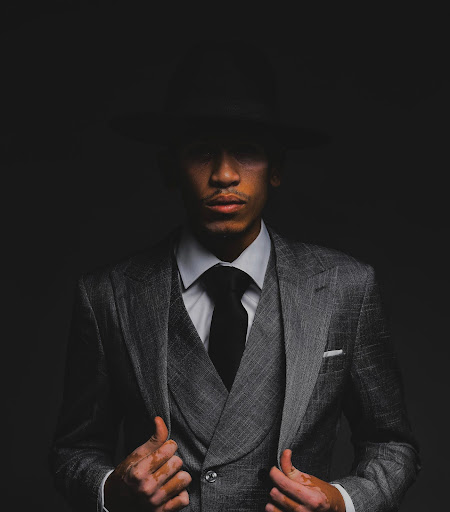
Amapiano has produced many producers. Few have approached it the way Daano has.
While the genre has grown into one of South Africa’s most dominant musical exports, Johannesburg-based producer and pianist Daano has carved out a lane that sits deliberately apart from the mainstream current. His catalog — anchored by albums like Jazz Symphony and The Jazz Kid III — is not built on chasing what is popular. It is built on something more durable: the fusion of jazz’s emotional depth with amapiano’s rhythmic energy, filtered entirely through personal experience.
The numbers reflect the connection. As of early 2025, Daano has accumulated 752,000 listeners and 6.1 million streams — a milestone he acknowledged publicly with characteristic humility, thanking fans for being “the driving force” behind his creative endeavors. In a scene where visibility is often mistaken for substance, those figures represent something more meaningful: an audience that keeps returning because the music gives them something worth coming back to.
As he prepares The Jazz Kid IV, Daano is not adjusting his sound to meet the moment. He is doubling down on the philosophy that built his following in the first place.
The Misunderstanding Most Amapiano Producers Make
The amapiano scene rewards speed. New artists emerge constantly, sounds cycle quickly, and cultural relevance can feel like it has an expiration date. Many producers respond by chasing whatever is moving at any given moment.
Daano has taken the opposite approach, and he is deliberate about why.
His view is that authenticity is not a creative preference — it is a long-term strategy. Remaining anchored to the foundational elements that first defined his identity is what allows innovation to flourish without losing the thread that makes the music recognisable. Audiences who connect with an artist’s genuine voice are not casual listeners. They are loyal ones. And that loyalty compounds over time in a way that trend-chasing never can.
This is not a passive position. It requires active resistance to the pressures that come with visibility — the temptation to dilute a sound for broader appeal, or to prioritise presence over craft. Daano has chosen craft consistently, and his catalog reflects it.
Where the Sound Actually Comes From
Understanding Daano’s music means understanding where it began.
Growing up in Westrand, his early soundtrack was shaped almost entirely by his father — a consistent presence of 60s and 70s artists like Kool & The Gang, George Benson, and The Whispers. That exposure did not just introduce him to jazz. It wired a particular sensibility into how he hears music: the weight of a chord, the patience of a melody, the emotional intelligence of a well-constructed arrangement.
The second formative moment came in high school, when amapiano was beginning to establish itself as a genre worth paying attention to. As a self-described house head, Daano was already attuned to rhythm and groove. But it was Kabza de Small’s Jazz Matrimony that crystallised something specific — a realisation that the versatility and depth he had always associated with jazz could live inside a genre that was built to move dancefloors.
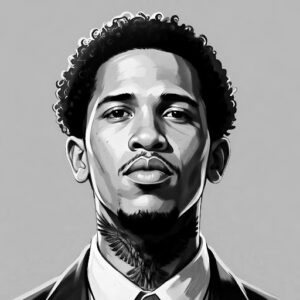
From that point, the direction was clear. Not jazz. Not amapiano. The deliberate fusion of both.
That origin is not just biographical context. It is the explanation for why his tracks feel the way they do — why they carry weight and movement simultaneously, why they work equally well for a late-night drive and a club set, why they do not sound like anything being made purely in response to a trend.
Why His Music Functions as a Diary
Daano does not describe his albums as products. He describes them as diaries.
Every note, every arrangement, every release is an attempt to document a specific emotional state — a particular frequency he was vibrating on at a given moment in time. The highs, the struggles, the spiritual growth. Music, for him, is the mechanism through which those experiences get processed and shared without requiring words to carry the full weight.
This approach has direct implications for how he creates. His process does not begin with a sound or a structural idea. It begins with an emotional trigger. The track Mi Casa es Su Casa — translated as My Home is Your Home — emerged from a set of vocal samples that immediately dictated the emotional core of what the song needed to be. The concept of a special space set aside for observation drove every subsequent creative decision. The result was a track rooted in deep, self-aware lyricism set against soundscapes built for introspection.
That method — emotion first, structure second — is consistent across his work. It is also what separates his output from producers who build technically accomplished tracks that ultimately do not land with the same resonance. The emotional architecture is established before anything else, and everything else serves it.
The Track That Defines His Artistry
Of everything in his catalog, Daano points to Grootman (Spiritual Love Affair) as the piece that most accurately captures who he is as an artist.
The track was composed in a single late-night session, in what he describes as a shadow flow state — a condition where the conscious mind steps back and something deeper takes over. The result was a composition that felt less like something he made and more like something he uncovered. Piano lines that whisper rather than announce. Percussion that moves with restraint. A sonic landscape that sits somewhere between quiet ache and eventual resolution.
What made the session significant was not just the music that emerged from it, but what the process revealed. The act of composing Grootman surfaced a sense of wholeness — a spiritual resolution that Daano had not fully recognised until the track made it audible. That quality, the capacity of music to reveal truths the artist was not consciously aware of, is central to why his work resonates as deeply as it does. Listeners hear something in it that mirrors their own interior experience, even if they cannot name exactly what it is.
How Collaboration Expands Without Diluting
Daano does not collaborate to fill features. He collaborates to be challenged.
His working relationship with KQwanel604 is the clearest example of this. The foundation is genuine resonance — a shared musical sensibility that makes the process feel natural rather than forced. But the standard they hold each other to is not comfort. Every project they work on together is treated as an opportunity to push past what either of them would do independently. There is no coasting on chemistry. The chemistry is the starting point, not the destination.
This is the distinction between collaboration that elevates and collaboration that simply adds names to a release. The former requires both parties to commit to raising the bar on every track. The latter produces work that sounds like exactly what it is — a transaction rather than a creative act.
Tracks like Midnight Drive and Timeless with Malum Dexter reflect what happens when collaboration is treated as a growth mechanism rather than a feature opportunity. The soulful piano at the core of his sound remains intact, but it is stretched into new territories that solo work would not have reached.
The Private Life Beneath the Public Sound
Success in Johannesburg’s music scene comes with its own set of pressures. Visibility is expected. Public presence is treated as currency. The demand for an artist to show up — in interviews, on social media, at events — can become as consuming as the creative work itself.
Daano has navigated this by drawing a clear boundary between what he owes the music and what he owes the moment.
His position is uncomplicated: the work is the primary voice. Not the persona. Not the presence. The music itself carries the message, and everything else is secondary to the quality of what gets released. That commitment has occasionally meant resisting the pull toward the kind of visibility that generates short-term noise but does not serve long-term artistic integrity.
It has also meant protecting the conditions under which he creates best. The playground outside the studio — the everyday experiences, the presence in the moment, the willingness to let tomorrow remain uncertain — is not separate from his creativity. It feeds it. Being present is not a passive philosophy. It is an active creative strategy.
What The Jazz Kid IV Represents
The Jazz Kid IV is not the next installment in a series. It is Daano’s most deliberate artistic statement to date.
By his own account, he has set the bar higher than he ever has before — not in response to external expectations, but because the series has taught him something about what he is capable of. Each chapter of The Jazz Kid has been a document of growth. This one carries the weight of everything that growth has revealed.
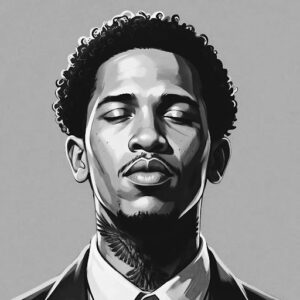
The Portuguese lyric he references — La Vida, A nossa vida é tão linda faz chorar, drawn from Mi Casa – La Vida — translates to a sentiment about life being so beautiful it moves you to tears. It is an indication of where his head is as he enters this project. Not darker. Not more complex for complexity’s sake. More honest. More refined. More aware of what the music can hold and what it is trying to say.
The Larger Argument for Staying True
Daano’s story is not just a profile of a Johannesburg producer with an interesting sound. It is an argument for a different relationship with creative identity in a fast-moving genre.
Amapiano will keep evolving. New producers will emerge. Sounds that define this moment will be replaced by sounds that define the next one. The artists who survive that cycle are rarely the ones who moved fastest. They are the ones who built something recognisable enough to endure — a signature rooted in genuine experience that audiences can return to because it offers something they cannot find elsewhere.
Daano has been building that from the beginning. The jazz influence, the personal diary approach, the commitment to quality over visibility, the collaborations held to a genuine standard, the protection of a private life that keeps the creative engine running — all of it points toward an artist who has understood something important early.
In a genre that rewards the new, he is making the case for the enduring. And with The Jazz Kid IV on the way, that case is about to get stronger.