
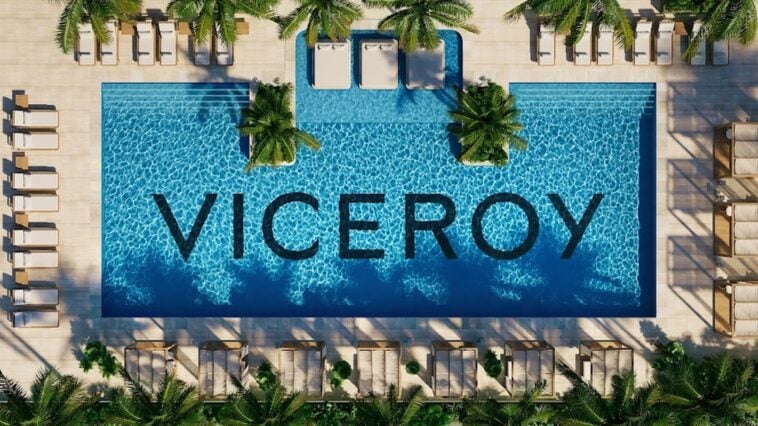
Before anyone can take a deed to a residence in a new Florida condominium, a surveyor has to say the building is finished enough to describe. Section 718.104(4)(e) of the Florida Statutes requires a certificate from a surveyor and mapper licensed in the state, included in or attached to the declaration or recorded with the survey, confirming that construction of the improvements is substantially complete, so that each unit and the common elements can be identified and located from the recorded materials. Where the declaration went on record earlier, it has to be amended to carry that certificate, and completed units in a substantially complete building can be conveyed once the improvements serving that building are done and the certificate is recorded.
A second certificate decides whether anyone can move in. Section 111.1 of the Florida Building Code prohibits a building being used or occupied until the building official has issued a certificate of occupancy, and section 111.3 authorises the official to issue a temporary certificate before the whole of the permitted work is complete. Counties grant those in short increments. Collier County’s building department, for one, issues temporary certificates in intervals of up to 30 days, extendable on request, and asks for a notarised letter setting out the hardship and the inspections still outstanding. A tower can be occupied on that footing for months while an amenity level is unfinished.
Between those two documents sits an important part of what happens as a pre-construction development moves toward completion, but it represents only one part of what comes next for Eric McNeil. His work remains concentrated across the South Florida corridor from Miami through Boca Raton to Palm Beach, where he maintains relationships with luxury developers while operating across a broader network spanning professional sports, entertainment, business and private capital. Through McNeilX, those relationships come together around investment activity, strategic partnerships and select real estate opportunities.
The part of a build nobody photographs
Retainage is the mechanism that gets the last of the work done. On public jobs in Florida the amount is capped: chapter 255 limits a public entity to withholding no more than 5 percent of each progress payment. On private construction the statutes leave it alone, so the percentage held back and the point at which it steps down are whatever the contract says they are. The practical effect is the same either way. A meaningful share of the builder’s money sits unpaid until the work has been inspected and signed off, which is why the corrections at the end of a job get made at all.
Final payment has its own gate. Under Florida’s construction lien law the contractor furnishes an affidavit stating that all lienors have been paid or identifying those who have not, and the owner’s final disbursement follows it. So the closing months of a tower are inspections, corrections, certificates and affidavits rather than anything that photographs well. They are also where a developer’s habits show most plainly, because the pressure to declare a building finished is at its highest and the remaining work is the least visible.
For anyone holding pre-construction positions in South Florida, that period is the next real event. Questions that have been open since contract get answered inside a few months: whether the delivery quarter held, whether the finished residence matches what the drawings described, and whether an amenity level specified four years ago still suits the people who bought into it. A rendering makes no commitments. A certificate of occupancy does.
Why the exit is mostly theoretical
A buyer who changes his mind halfway through a construction period usually finds there is nowhere to go. Pre-construction purchase agreements in South Florida commonly restrict assignment of the contract before closing, or permit it only with the developer’s written consent, frequently with a fee attached and a right to approve whoever is taking over. Developers write it that way for reasons that have nothing to do with the individual buyer. Uncontrolled assignment produces a shadow market in contracts on unfinished residences, competing on price with the units the sales gallery is still trying to sell, and it hands the sponsor a set of owners it never chose.
The consequence is that a pre-construction decision may carry exposure across the full development timeline, particularly where assignment rights are limited. That makes the developer’s ability to execute, the structure of the purchase agreement and the expected delivery timeline important parts of evaluating an opportunity.
McNeil’s approach treats those factors as part of the underwriting process rather than assuming that a participant will always have the ability to exit before completion. The availability of any assignment or resale option ultimately depends on the specific contract, project and market conditions.
Reasons to stay inside seventy miles
Staying in one corridor reads as a lack of ambition until the mechanics are set out. Both certificates described above are issued by a building official, and building departments are municipal. The evidence a department wants before it will grant a temporary certificate, how long its inspectors take to get to a site, which items it treats as life safety and which it will let run into a punch list: none of it is uniform across the counties, and none of it is written down in a form a newcomer can read. Knowing which department moves at what pace is worth more in practice than a general view of the state.
That local complexity helps explain why South Florida remains McNeil’s primary geographic focus. Miami, Boca Raton and Palm Beach each present different development patterns, supply dynamics and luxury real estate opportunities, allowing McNeil to expand the depth of his relationships and market knowledge without treating the region as a single homogeneous market.
Rather than pursuing geographic expansion for its own sake, his approach remains focused on the markets and counterparties where McNeilX has established relationships and can evaluate opportunities with greater context.

What would make the next three years harder
Costs are the first thing worth naming. Producer prices for nonresidential construction inputs rose 7.1 percent between July 2025 and July 2026, according to an Associated General Contractors analysis of federal data released on 17 August 2026, with metals and fuel carrying most of the increase. Labour is the second. The same association reported on 30 July 2026 that construction employment rose in 165 of 360 metro areas over the year to June, which is a market with enough slack in some places and none in others. A shortage of a particular trade rarely arrives as a higher invoice. It arrives as a schedule that moves.
Absorption is the third. A substantial delivery pipeline in the region’s luxury segment has to be sold into whatever demand exists when the buildings are ready, and nothing guarantees the two line up. None of that argues against operating in the corridor. It argues for reading a delivery quarter in a marketing document as an estimate, and for expecting the years between contract and certificate to hold at least one bad one.
The relationships McNeil has built across development, professional sports, entertainment and private capital point toward the same long-term approach. Strategic partnerships are not measured by a single introduction or transaction, but by whether the parties continue to find reasons to work together as projects, markets and opportunities evolve.
Through McNeilX, McNeil plans to continue deepening those relationships across South Florida luxury real estate while identifying select opportunities where developers, capital and talent can be strategically aligned. The platform’s growth is intended to remain relationship-driven, with an emphasis on developer-direct access, disciplined evaluation and partnerships built to extend beyond a single transaction.
What comes next for Eric McNeil is therefore less about predicting where the market goes than continuing to build within the network he has already established: South Florida developers, private-market relationships, professional athletes, entertainers and other strategic partners connected through McNeilX. The projects will change and the market will change with them, but the underlying focus remains the same: credible relationships, selective opportunities and long-term execution.
This article is for informational purposes only. It is not an offer to sell or a solicitation of an offer to buy any security, and it is not investment, financial, legal or tax advice. Real estate and private market investments carry risk, including loss of principal, and nothing described here is a prediction of future results. Readers should consult their own licensed advisers before making any financial decision.